
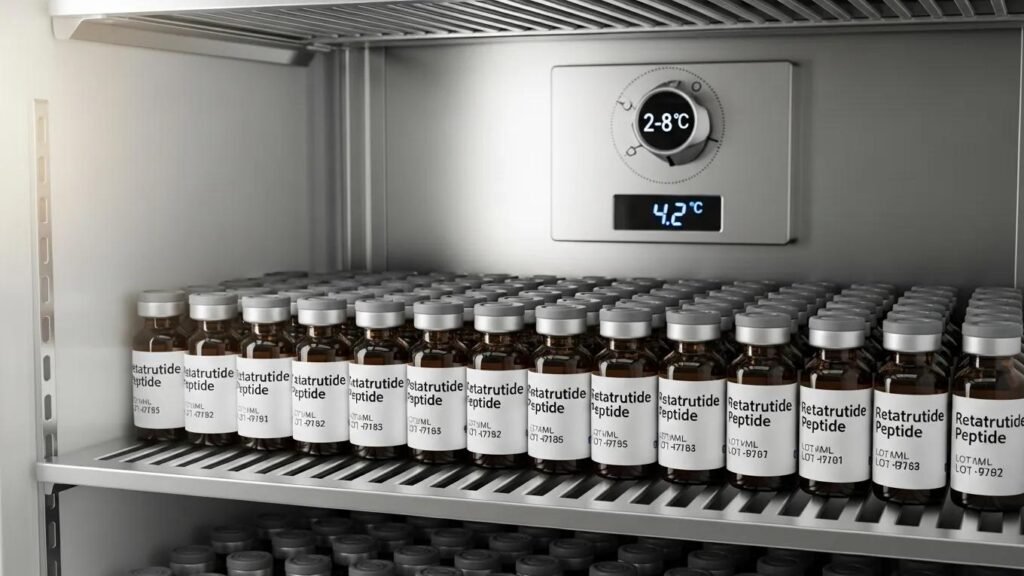
Retatrutide Storage: Best Peptide Handling and Stability Practices for Laboratory Use
Proper storage of retatrutide preserves its stability and experimental reliability. This guide summarizes practical storage temperatures, handling steps, refrigeration practices, and essential quality checks researchers should follow to minimize degradation and retain potency.
What Are the Optimal Storage Conditions for Retatrutide Peptides?
Store retatrutide in a cool, dry, dark environment with controlled humidity. For long-term storage, keep it frozen (typically -20°C to -80°C); for short-term use, refrigeration at 2°C–8°C is acceptable. Minimize light, moisture, and unnecessary exposure to air during handling to reduce degradation.
Nextday Sciences LLC dba Nextday Peptides supplies high-purity research peptides and recommends these best practices to support experimental consistency.
What Temperature Range Ensures Retatrutide Stability?
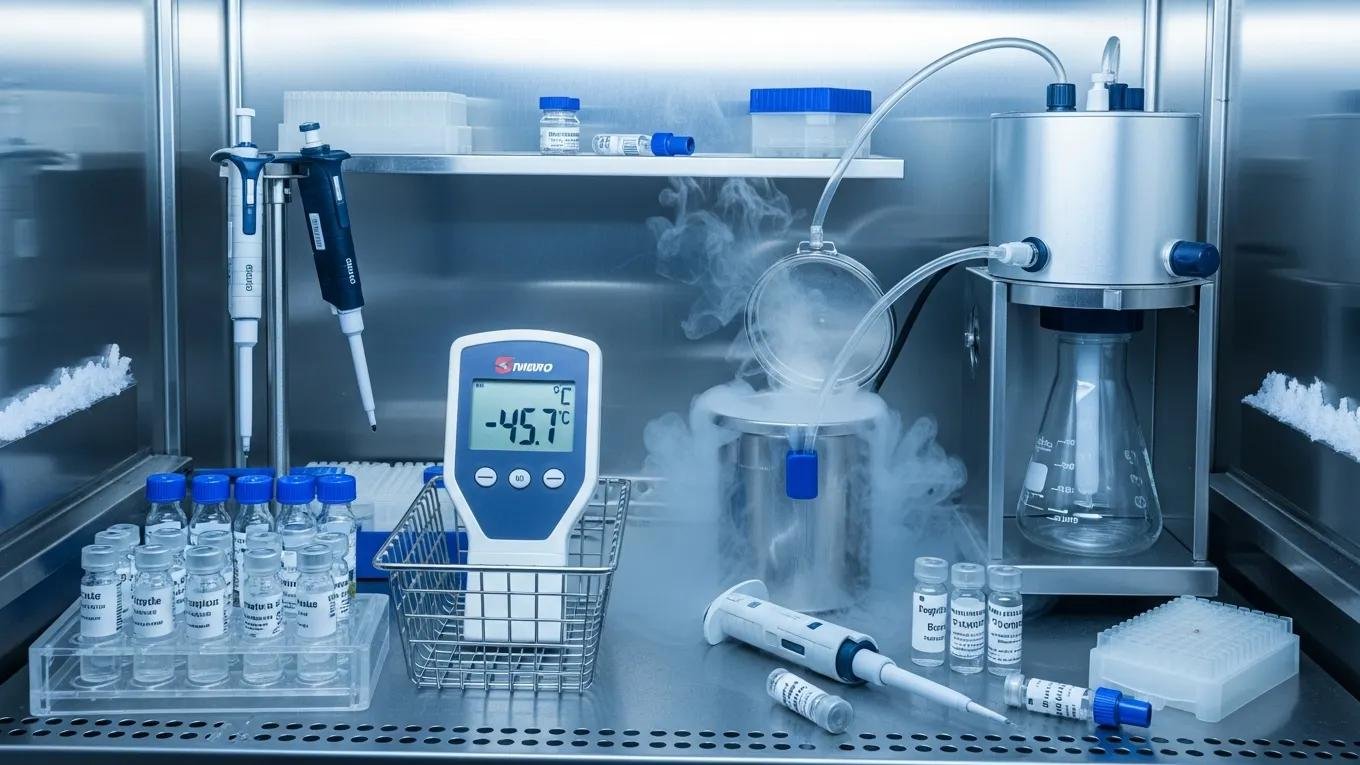
Retatrutide is temperature sensitive. Long-term stability is best maintained at -20°C to -80°C to limit thermal degradation. Avoid freeze-thaw cycles, which can denature the peptide and reduce potency. Use opaque or light-excluding containers to protect against photodegradation.
How Does Retatrutide Purity Relate to Proper Storage Temperature?
Higher temperatures accelerate breakdown and increase impurities. Keeping retatrutide within recommended temperature ranges reduces byproduct formation and helps preserve potency and the peptide’s functional properties for reliable experimental outcomes.
How Should Retatrutide Be Handled and Managed to Preserve Shelf Life?
Follow concise handling protocols to extend shelf life. Key practices include:
- Minimize air exposure: Reduce oxidation risk by using airtight containers and minimizing open-vial time.
- Use appropriate vials: Choose airtight, light-blocking vials or secondary packaging.
- Limit transfers: Move the peptide quickly and keep it in its recommended temperature zone during handling.
These steps reduce invisible degradation and maintain experimental reliability.
Retatrutide Stability: Preventing Degradation in Research
Retatrutide’s stability is the critical factor delineating between a productive research protocol and a costly waste of product. Even with the highest-purity vials available and an optimally designed titration schedule, suboptimal outcomes can arise if the peptide degrades prior to systemic absorption. Factors such as heat, light exposure, moisture, improper reconstitution, or rough handling can compromise the integrity of this complex 39-amino-acid triple agonist molecule without overt visual indicators. While the physical appearance of the vial and solution may remain unchanged, the peptide’s potency diminishes, consequently reducing the efficacy of the intended protocol.Retatrutide Stability
What Are Best Practices for Laboratory Peptide Refrigeration?
Good refrigeration practice reduces risk of temperature excursions and preserves peptide integrity. Implement these basics:
- Stable equipment: Use units with reliable temperature control and alarms.
- Organized storage: Arrange vials to minimize door-open time and avoid crowding that hinders airflow.
- Monitoring: Keep logs or automated alerts to detect deviations quickly.
Proper equipment and monitoring mitigate accidental warming that can harm retatrutide.
How Does Freeze-Thaw Affect Retatrutide Stability and Solubility?
Repeated freeze-thaw cycles can denature and reduce solubility. Aliquoting into single-use portions prevents repeated thawing of the bulk stock and preserves solubility and activity for each experimental use.
What Quality Assurance Measures Confirm Retatrutide Integrity During Storage?
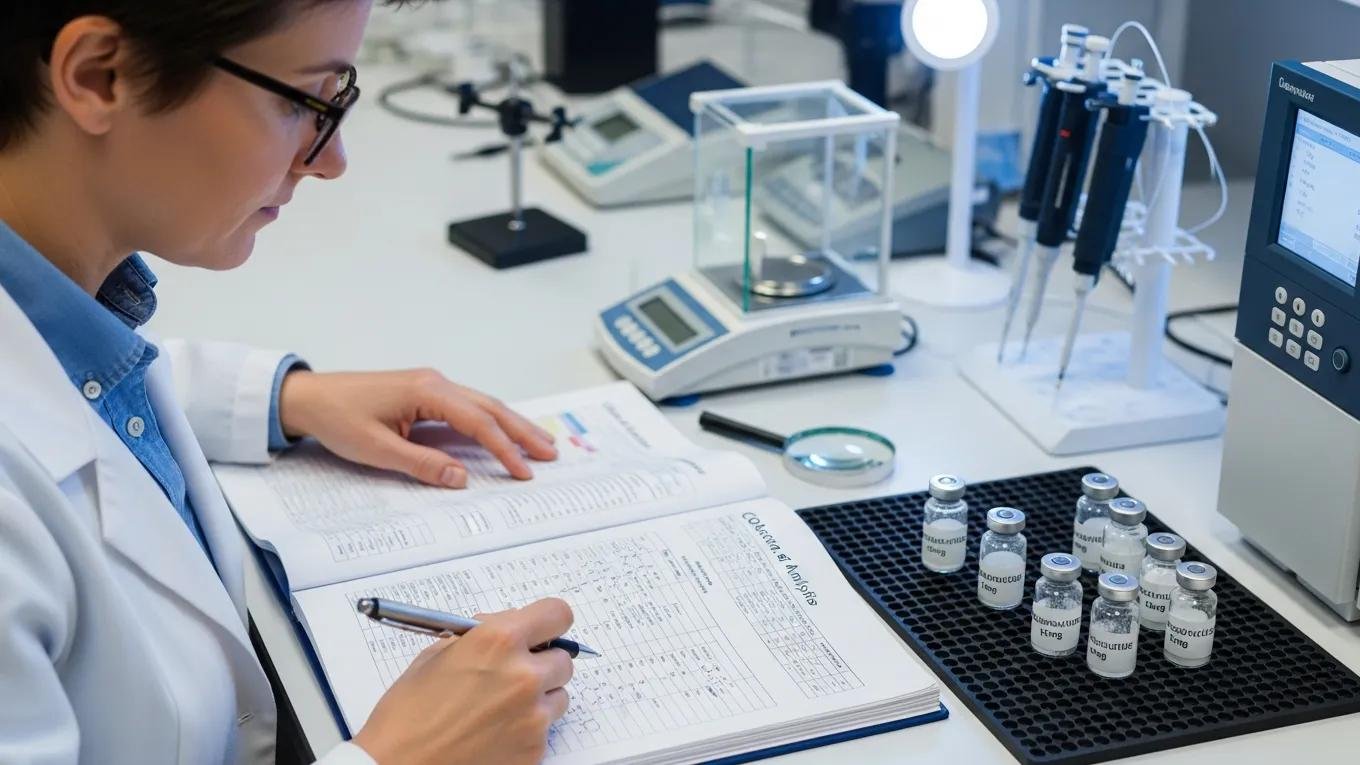
Key QA checks help confirm integrity over time. Consider these measures:
- Certificates of Analysis (COA): Verify batch purity and identity before use.
- Stability studies: Review any available stability data for storage guidance.
- Routine inspections: Schedule checks of storage conditions and vial appearance.
How to Use Certificates of Analysis to Verify Retatrutide Purity?
When reviewing COAs, confirm the batch number and date, check impurity levels against acceptable limits, and ensure the results match your supplier’s specifications. Researchers can access provided COAs for retatrutide here.
Which Stability Data Support Retatrutide Storage Protocols?
Useful stability data typically covers temperature sensitivity, light sensitivity, and shelf-life estimates. Use these data points to select storage temperatures, vial types, and acceptable storage durations for your lab’s workflow.
What Are Common Questions About Retatrutide Storage and Handling?
Below are concise answers to frequently raised practical concerns.
How Long Can Retatrutide Be Stored Without Losing Potency?
Under recommended frozen storage (-20°C to -80°C), retatrutide can remain stable for many months; some guidance cites up to 12 months. Follow the supplier’s stability data and COA for batch-specific guidance.
What Is the Correct Procedure for Retatrutide Reconstitution?
Reconstitute gently: add sterile or bacteriostatic water slowly, inject down the vial wall, and swirl rather than shaking to dissolve. Use and store reconstituted solution per the manufacturer’s instructions.
Retatrutide Reconstitution and Storage Protocol
To reconstitute retatrutide, introduce bacteriostatic (BAC) water to the vial containing the lyophilized powder. For a 10mg vial, the addition of 1mL of BAC water yields a concentration of 10mg/mL (equivalent to 1mg per 10 units on a U-100 syringe). Alternatively, introducing 2mL will result in a concentration of 5mg/mL (equivalent to 1mg per 20 units). Carefully inject the bacteriostatic water down the inner wall of the vial, then gently swirl the contents until complete dissolution is achieved. Subsequently, store the reconstituted solution under refrigeration at 36-46°F (2-8°C).How Long Does Retatrutide Take to Work? Week-by-Week Timeline, T Hill
To source research peptides, including retatrutide, see the product catalog at Nextday Sciences LLC dba Nextday Peptides.
In summary, controlling temperature, minimizing handling stresses, using appropriate vials, and verifying COAs are the most effective steps labs can take to preserve retatrutide stability and experimental reliability.
Frequently Asked Questions
What are the signs that retatrutide has degraded?
Watch for changes in pH, precipitates, unusual odors, or unexpected experimental potency loss. These can indicate degradation even if the vial appears unchanged.
Can retatrutide be refrozen after thawing?
Refreezing is discouraged. Aliquot stock prior to freezing so only required amounts are thawed once.
What documentation should accompany retatrutide shipments?
Expect a Certificate of Analysis and temperature logs for transit; retain these for quality tracking.
How often should the storage conditions for retatrutide be checked?
Check storage conditions at least weekly and use temperature logs or alarms for continuous monitoring.
What are the effects of light exposure on retatrutide?
Exposure to UV or visible light can accelerate degradation. Store in light-blocking vials and keep in the dark when not in use.
What is the best way to dispose of expired retatrutide?
Dispose of expired material per local chemical and biological waste regulations; follow your facility’s hazardous waste procedures.
Are there specific tools recommended for retatrutide handling?
Use sterile syringes, chemically compatible pipettes, and airtight, light-resistant vials to minimize exposure to air and light.