

Semaglutide Compound Research Peptide: Purity, Applications, and Quality Assurance for Laboratory Research
Semaglutide is a GLP-1 receptor agonist utilized exclusively for research purposes in the study of obesity and diabetes-related metabolic pathways. This guide summarizes key points about purity standards, common laboratory applications, and essential quality assurance steps researchers should check when sourcing semaglutide research peptides. For procurement, reviewing a supplier’s research peptides catalog and documentation is a practical first step. Products are intended for research use only and not for human or veterinary use.
Semaglutide is studied in laboratory settings to explore mechanisms relevant to metabolic regulation without implying therapeutic use.
Semaglutide: A GLP-1 Receptor Agonist Investigated in Type 2 Diabetes Research
Glucagon-like peptide-1 receptor agonists (GLP-1 RAs) were introduced to the market in 2005 as a novel therapeutic class for the clinical management of type 2 diabetes mellitus (T2DM). Since 2005, six approved products have become available, with semaglutide (Novo Nordisk) being the most recent. Pharmacokinetics and Clinical Implications of Semaglutide: A New Glucagon-Like Peptide (GLP)-1 Receptor Agonist: S. Hall et al., D Isaacs, 2018
Purity
Purity strongly influences semaglutide’s reliability in experimental research. Suppliers typically guarantee ≥99% purity, confirmed by HPLC-based testing and documented on a Certificate of Analysis (COA). These COAs serve as the primary verification tool for researchers to confirm identity, potency, and absence of major contaminants in the compound designated for research use.
Advanced analytical methods, including multimodal or stability-indicating HPLC, are increasingly used in quality control to detect degradation products and ensure batch consistency.
Semaglutide Purity and Quality Control Methods
Given the increasing utilization of semaglutide (SEM) and tirzepatide (TIR) in pharmaceutical research and development, a rapid, straightforward, and comprehensive analytical method for their quantification is crucial for quality control. This study introduces the first stability-indicating HPLC method for the simultaneous quantification of TIR and SEM under various stress conditions (acidic, basic, oxidative, and photolytic degradation), demonstrating no interference from degradation products. A multimodal HPLC stability indicating approach for the estimation of Semaglutide and Tirzepatide in bulk, pharmaceutical dosage forms, and rat plasma: a six-edged …, HA Khalil, 2026
What defines high-purity semaglutide research peptide?
High-purity semaglutide contains minimal impurities, ensuring experimental results are due to the active peptide itself. The common threshold of ≥95% indicates the majority of the material is the intended peptide with limited contaminants that could confound laboratory findings.
How is semaglutide peptide purity tested and validated?

HPLC is the standard assay for research-grade purity and is often complemented by mass spectrometry or identity testing. Reports should include chromatograms, retention times, and quantitative purity values so researchers can confirm the compound meets research specifications. This material is intended strictly for laboratory research and is not intended for administration to humans or animals.
What purity levels does Nextday Peptides guarantee?
Nextday Peptides lists a minimum guaranteed purity of ≥95% for semaglutide research peptides and provides COAs for batch verification consistent with research use only.
Applications
In laboratory research, semaglutide is used to investigate metabolic regulation including insulin secretion, appetite control, and related signaling pathways. Its pharmacological profile makes it suitable for in vitro receptor binding studies, animal models under approved protocols, and translational metabolic research contexts focused on mechanistic understanding rather than therapeutic use.
Which research applications use semaglutide compound peptides?
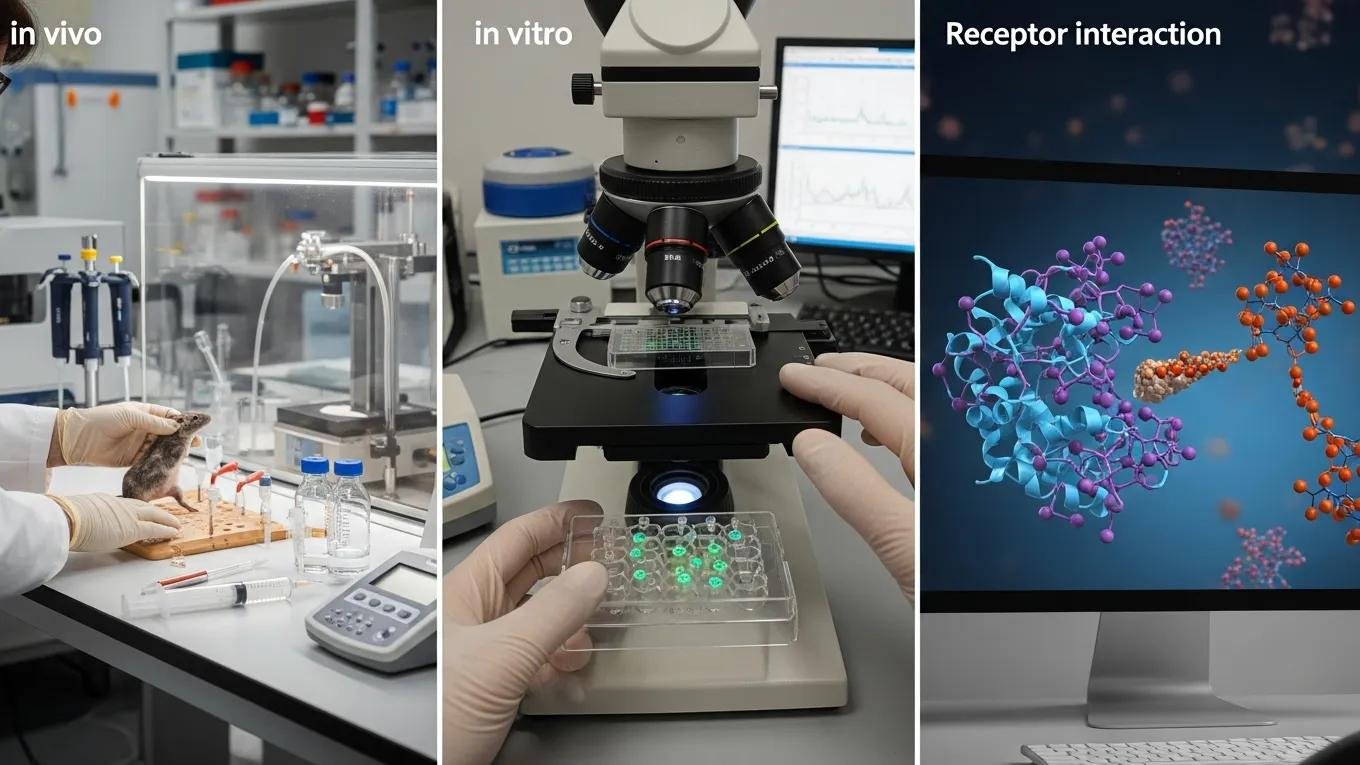
- Metabolic Disorder Research: Employed to study biochemical pathways relevant to obesity and diabetes in experimental models.
- Receptor Interaction Modeling: Used in controlled studies of GLP-1 receptor binding and related signaling mechanisms.
- Insulin Secretion Studies: Applied in assays and models to investigate insulin response modulation in research settings.
Research also explores semaglutide’s biochemical activity relevant to conditions such as non-alcoholic steatohepatitis (NASH) within a strictly experimental and mechanistic framework.
Semaglutide in Laboratory Research on Metabolic Disorders
Semaglutide, a peptidic GLP-1 receptor agonist, is under investigation in research contexts for its molecular effects related to type 2 diabetes mellitus and obesity. Studies focus on metabolic and cellular pathways associated with non-alcoholic steatohepatitis (NASH) and other conditions. Therapeutic Potential of Semaglutide, a Newer GLP-1 Receptor Agonist, in Abating Obesity, Non-Alcoholic Steatohepatitis and Neurodegenerative diseases: A …, M Karuppasamy, 2022
How does semaglutide function as a GLP-1 receptor agonist in research studies?
Semaglutide binds GLP-1 receptors to enhance glucose-dependent insulin secretion and reduce appetite signals in experimental systems. These effects are studied to better understand metabolic and behavioral pathways related to diabetes and weight regulation within laboratory models.
Quality Assurance Measures
Maintaining peptide integrity for research requires consistent quality assurance processes: validated analytical testing, controlled storage conditions, and documented handling procedures. Suppliers and research labs should follow best practices to prevent compound degradation and contamination, ensuring reliability of scientific results.
How to source and verify authentic semaglutide peptides for research?
Purchase from reputable vendors who provide Certificates of Analysis (COAs), batch numbers, and detailed test methods. Cross-check COAs for purity, identity, and batch correspondence before incorporating the material in experimental protocols. Verification by third-party laboratories improves confidence in research materials.
What makes Nextday Sciences LLC a reliable supplier of research-grade semaglutide?
Nextday Sciences LLC (Nextday Peptides) emphasizes transparency and documentation for high-purity research peptides, aiding reproducible laboratory experiments. Their products are supplied solely for research applications and are not for human or veterinary use.
How to interpret Certificates of Analysis for semaglutide research compounds?
COAs should clearly list purity percentage, test methodology (such as HPLC), and batch identification. Confirm that the COA corresponds to the purchased research lot and that the analytical methods are appropriate for peptides intended for laboratory investigation only.
- Purity Percentage: Verify it meets or exceeds the supplier guarantee (commonly ≥95%).
- Test Methodology: Look for HPLC and supporting identity assays typical of research peptides.
- Batch Information: Ensure the COA matches the purchased lot number for traceability in research.
What are recommended storage and handling practices for semaglutide peptides in research?
Store semaglutide peptides at recommended low temperatures and protect from light and moisture to preserve stability. Follow supplier guidelines on shelf life to maintain research-grade material integrity over time.
- Storage Temperature: Maintain at -20°C or as advised for long-term research stability.
- Handling Precautions: Limit freeze-thaw cycles and use sterile techniques in research environments to minimize contamination risk.
- Shelf-Life Consultation: Refer to supplier stability data when planning experimental timelines.
What storage temperatures optimize semaglutide stability for research use?
Low-temperature storage (commonly -20°C) reduces degradation and helps maintain compound integrity for laboratory research purposes over extended periods.
How to handle semaglutide peptides safely in laboratory settings?
Employ aseptic technique, use sterile consumables, and work within controlled environments to avoid contamination. Proper documentation of handling steps promotes reproducibility and integrity of experimental data. These measures are intended exclusively for research use of semaglutide peptides and not for any form of human or veterinary administration.
Research Use Only Disclaimer
All information contained within this article pertains to semaglutide as a research chemical exclusively for laboratory investigation. Semaglutide products mentioned are not approved for human or animal use, and any references to clinical or therapeutic contexts serve only to inform relevant research applications. Researchers must adhere to all applicable regulations and institutional policies governing the use of experimental compounds.
Frequently Asked Questions
What are the observed research-related effects of semaglutide in laboratory models?
Laboratory models have identified effects on cellular signaling pathways related to glucose metabolism and appetite regulation. Any physiological or toxicological observations are limited to experimental contexts and do not constitute medical guidance.
How does semaglutide compare to other GLP-1 receptor agonists in research studies?
Semaglutide often demonstrates prolonged receptor activity and distinct pharmacodynamic profiles in experimental systems compared to other GLP-1 receptor agonists, which may inform comparative mechanistic research.
Are there specific research models best suited for semaglutide studies?
Semaglutide is applied in various in vitro and animal model systems designed to study metabolic regulation. Researchers should select models appropriate for their specific experimental goals and conform to ethical research standards.
What are the legal and regulatory considerations for semaglutide use in research?
Regulations vary by jurisdiction. In the U.S., research use must align with FDA guidelines, institutional approvals, and ethical review board protocols. Researchers must ensure compliance with all relevant laws governing experimental compounds.
What testing methods are recommended for assessing semaglutide activity in research?
Combine purity assays such as HPLC with bioassays including cell-based receptor activation and insulin secretion studies to evaluate chemical integrity and biological activity within laboratory research settings.