🚚 Free Shipping — $200+ Singles · $300+ Boxes

Research Education

{+title+}

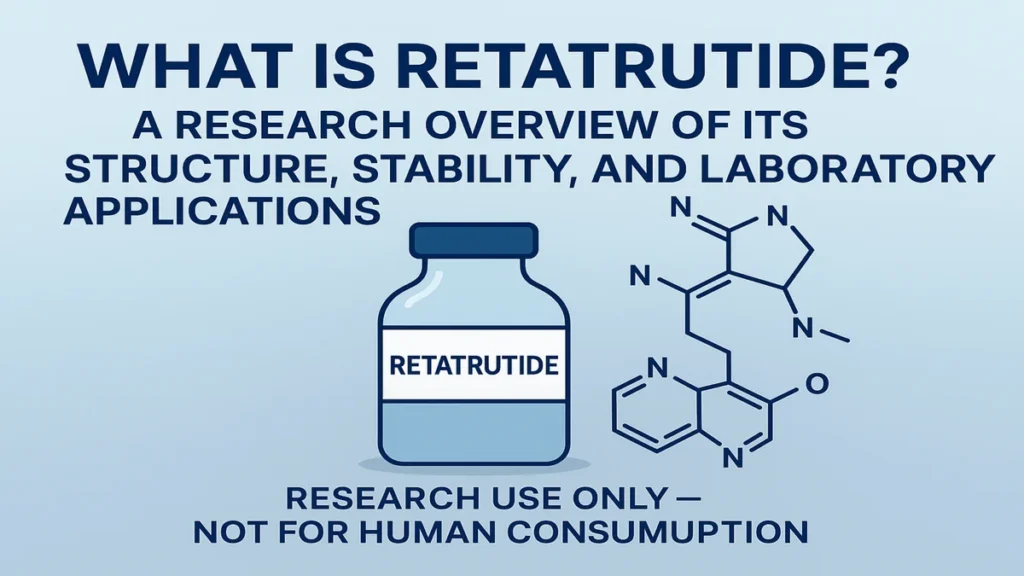
What Is Retatrutide? Complete 2025 Research Overview of Its Structure, Stability, and Laboratory Applications

Overview Retatrutide is referenced in the scientific and patent literature as a synthetic peptide reagent developed for receptor-targeted research. This article summarizes the analytical-chemistry and laboratory-handling considerations relevant to Retatrutide research. Throughout, the material is discussed strictly in the context of laboratory investigation and quality control: Research Use Only — Not for Human Consumption. Chemical […]

What Is Retatrutide? Complete 2025 Research Overview of Its Structure, Stability, and Laboratory Applications Read More »

{+title+}

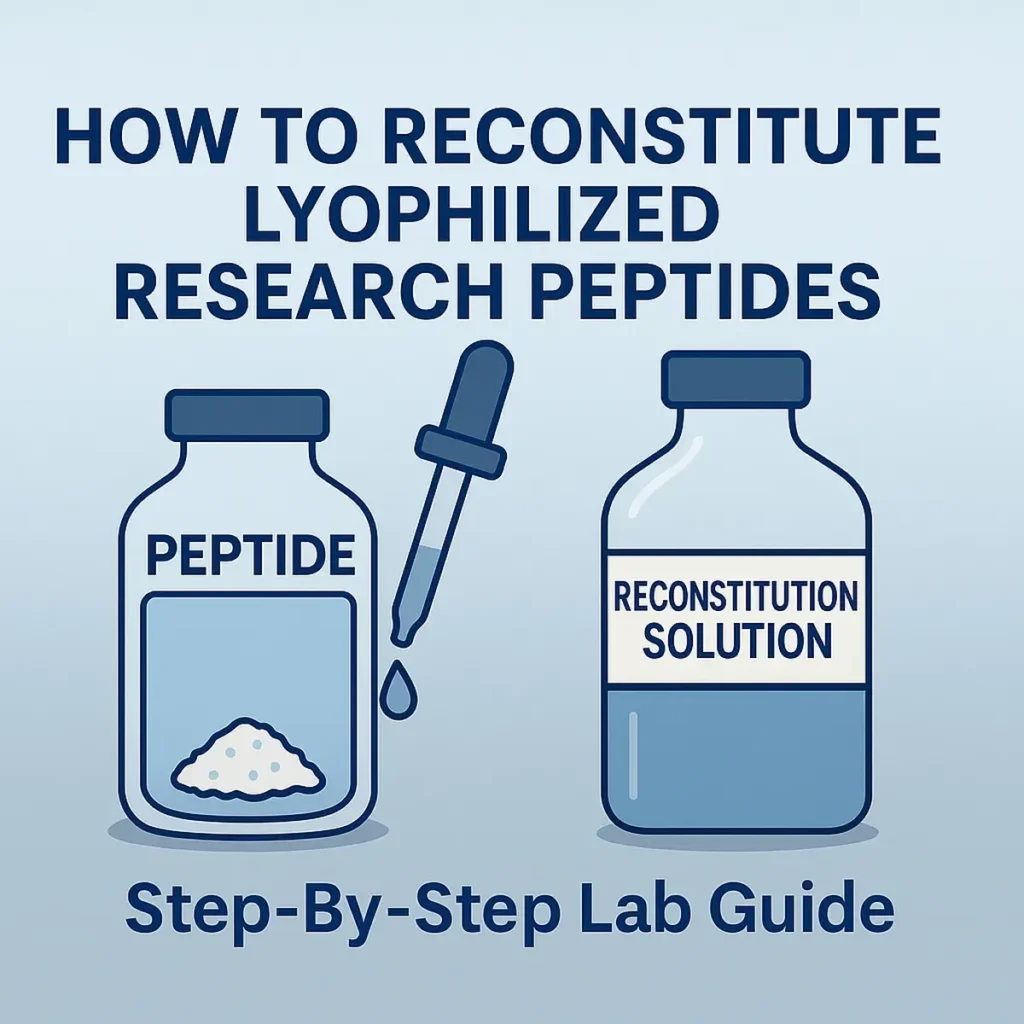
How to Reconstitute Lyophilized Peptides: Safe, Accurate Research Guide

How Researchers Safely Reconstitute Lyophilized Peptides Category: Research Handling & Preparation Lyophilized (freeze-dried) peptides remain stable during storage and shipping, but before research can begin they must be properly reconstituted with a sterile solvent. Correct technique ensures accuracy, purity preservation, and reproducible results in laboratory settings. What Reconstituting a Peptide Means Reconstitution is the process

How to Reconstitute Lyophilized Peptides: Safe, Accurate Research Guide Read More »

{+title+}

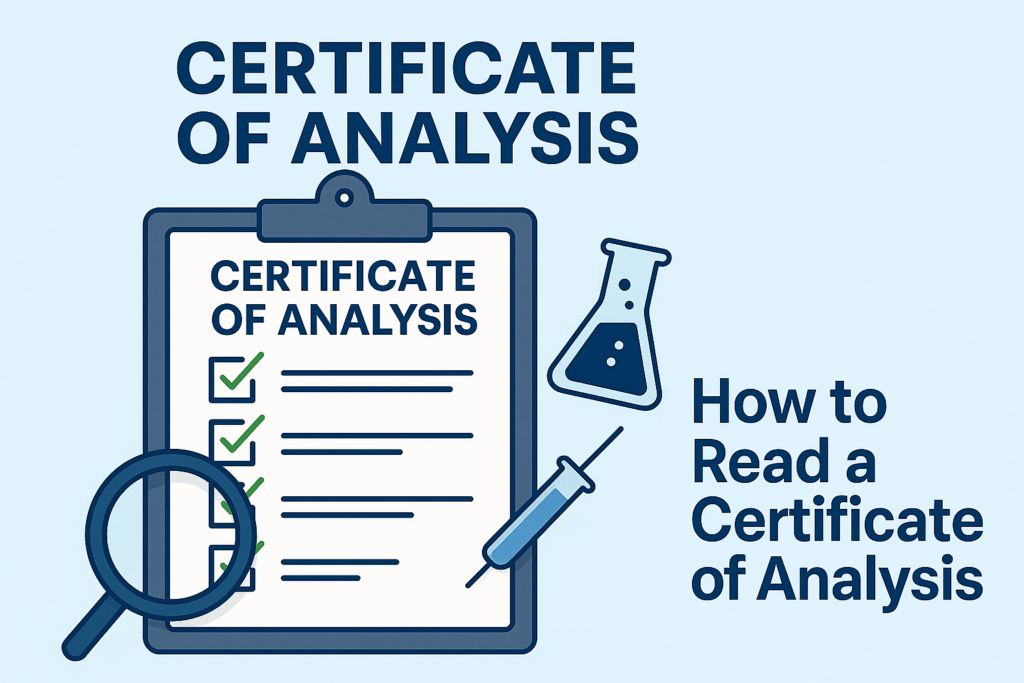
How to Read a Certificate of Analysis (COA) for Research Peptides

How to Read a Certificate of Analysis (COA) for Research Peptides A Certificate of Analysis (COA) is essential documentation accompanying research peptides. It verifies purity, identity, and batch tracking information used in laboratory environments. Key Sections of a COA 1. Product Identification Peptide name CAS number (if applicable) Sequence or formula Batch (lot) number 2.

How to Read a Certificate of Analysis (COA) for Research Peptides Read More »

Shopping Cart
Shopping cart0
There are no products in the cart!
Continue shopping
0